Molkenmarkt Quarter
A pair of townhouses as part of the reconstruction of Berlin’s historic Molkenmarkt Quarter
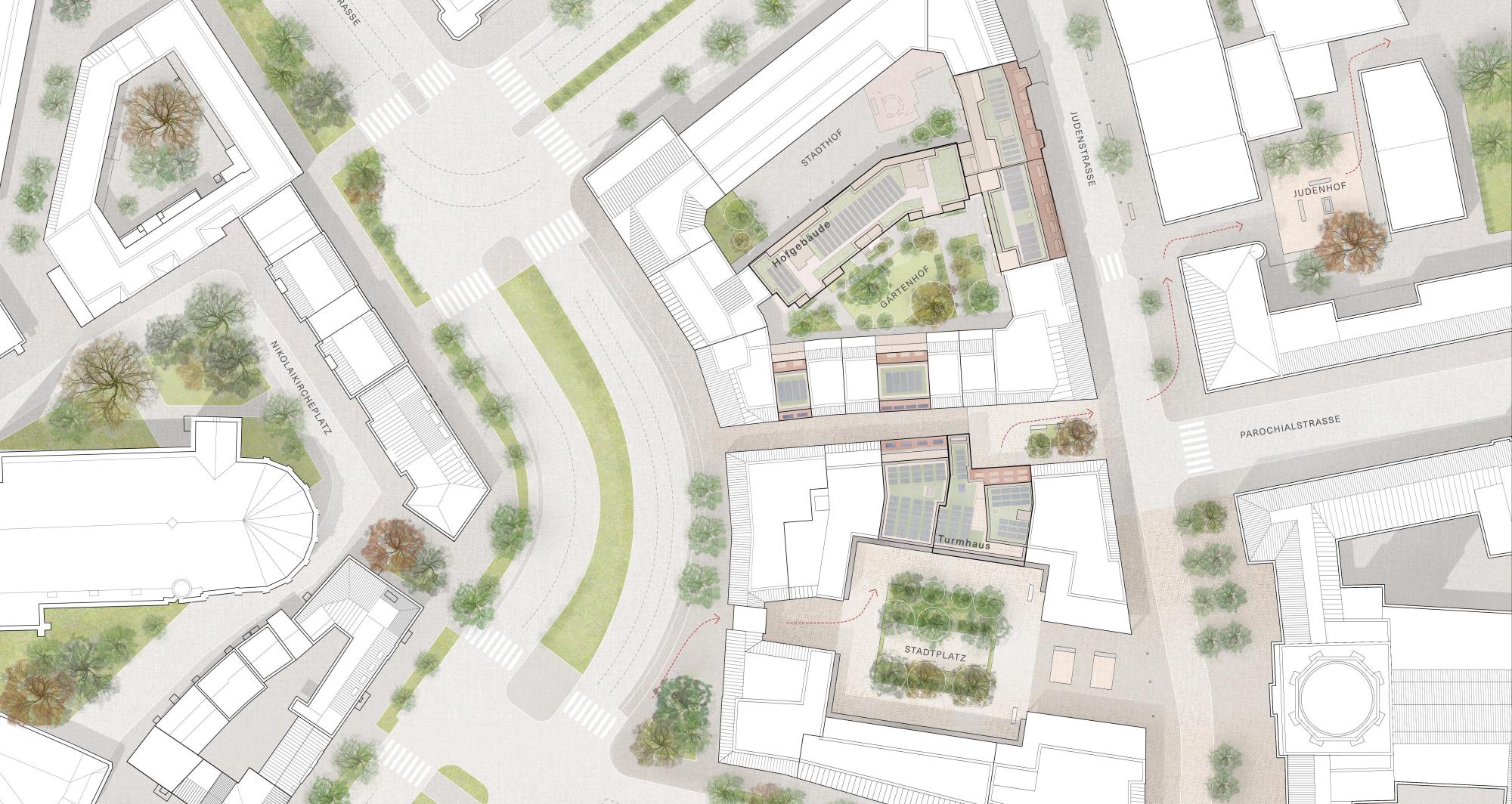
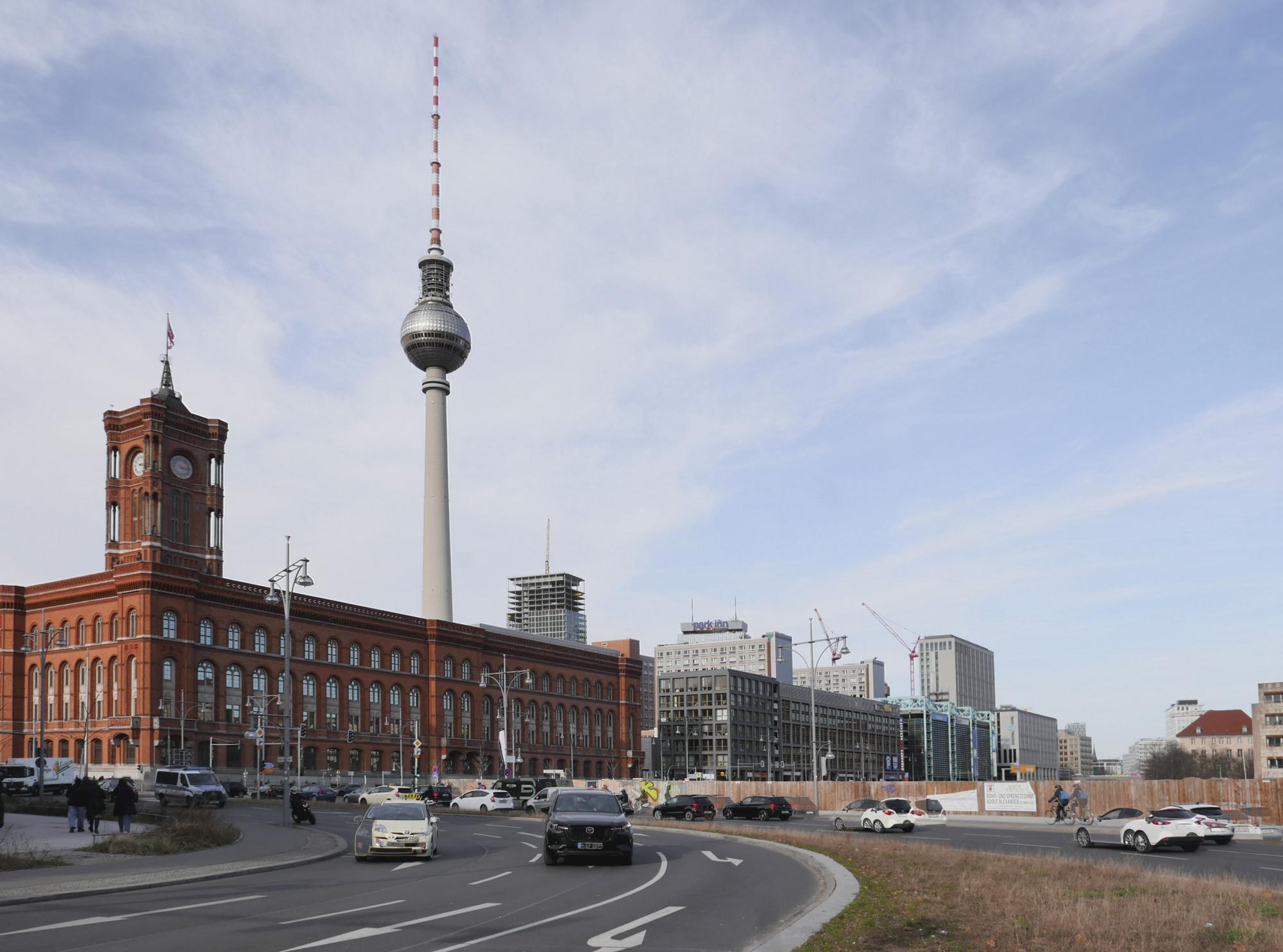
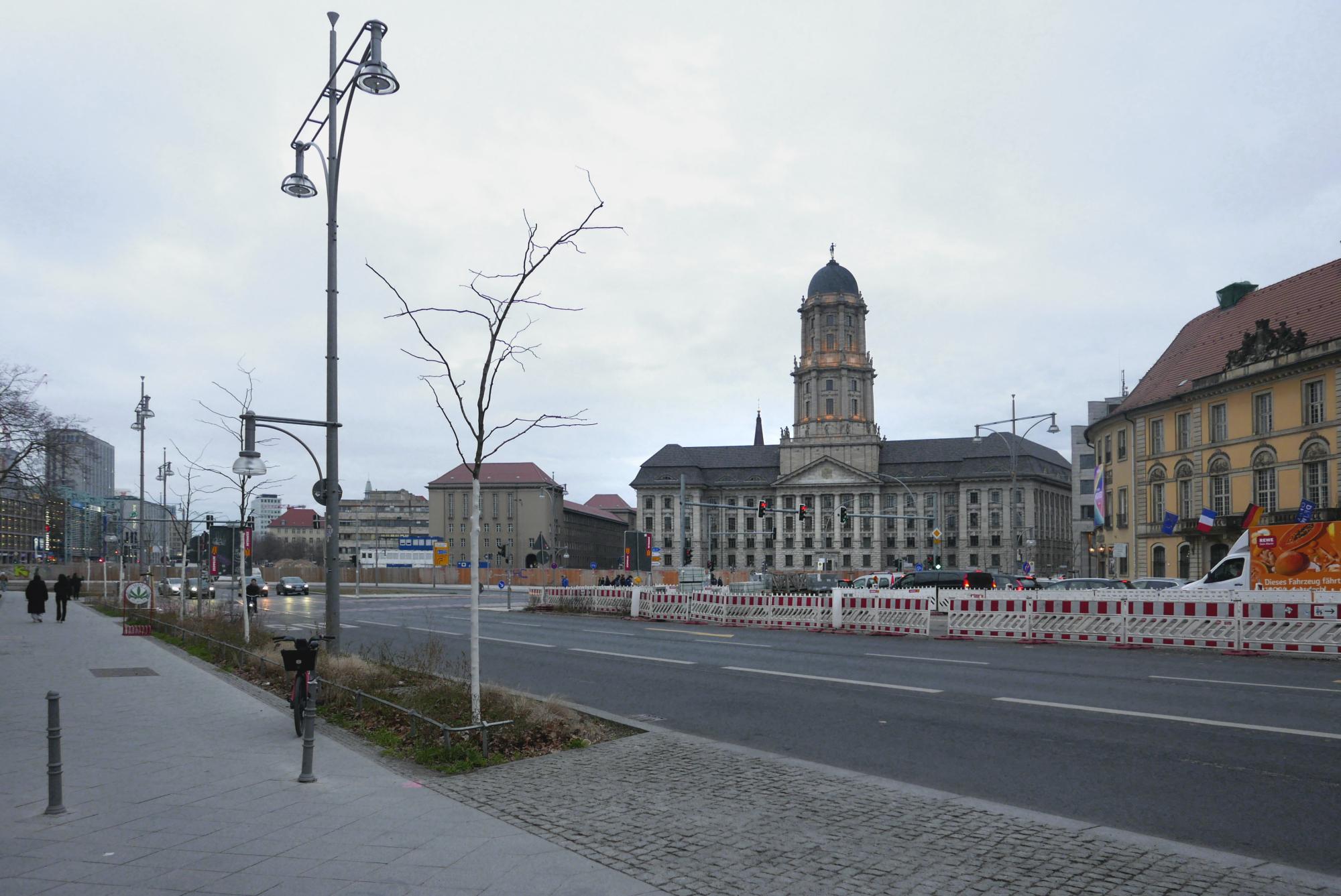
Situated on the location of Berlin’s most historic marketplace, the Molkenmarkt masterplan presents one the city’s most significant urban reconstruction projects after decades of vacancy and poor land use as a car-dominated junction.
The framework reinstates the historic city grain of compact urban townhouses and courtyards within mixed-use urban blocks, re-establishing pedestrian connections between local monuments such as the Altes Stadthaus and the Rotes Rathaus.
Gort Scott, working alongside Kim Nalleweg and Duplex Architekten, have designed two in a series of buildings within the masterplan: The Hofgebäude – Courtyard Building, and the Turmhaus – Tower Building. The buildings reinterpret the architecture of Berlin’s Gründerzeit-era townhouses and the spatial pattern of the ‘Hof’ courtyard type.
Turmhaus
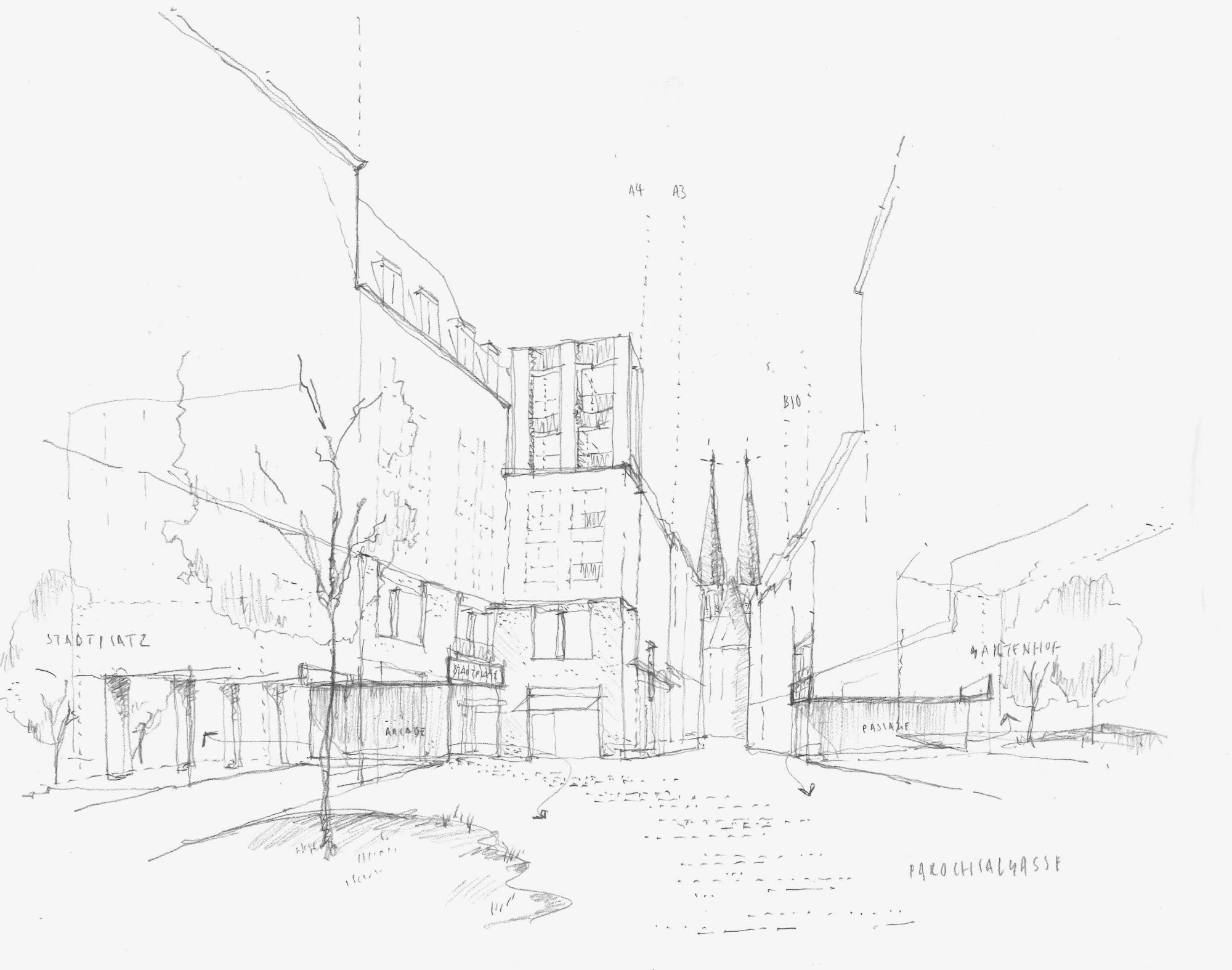
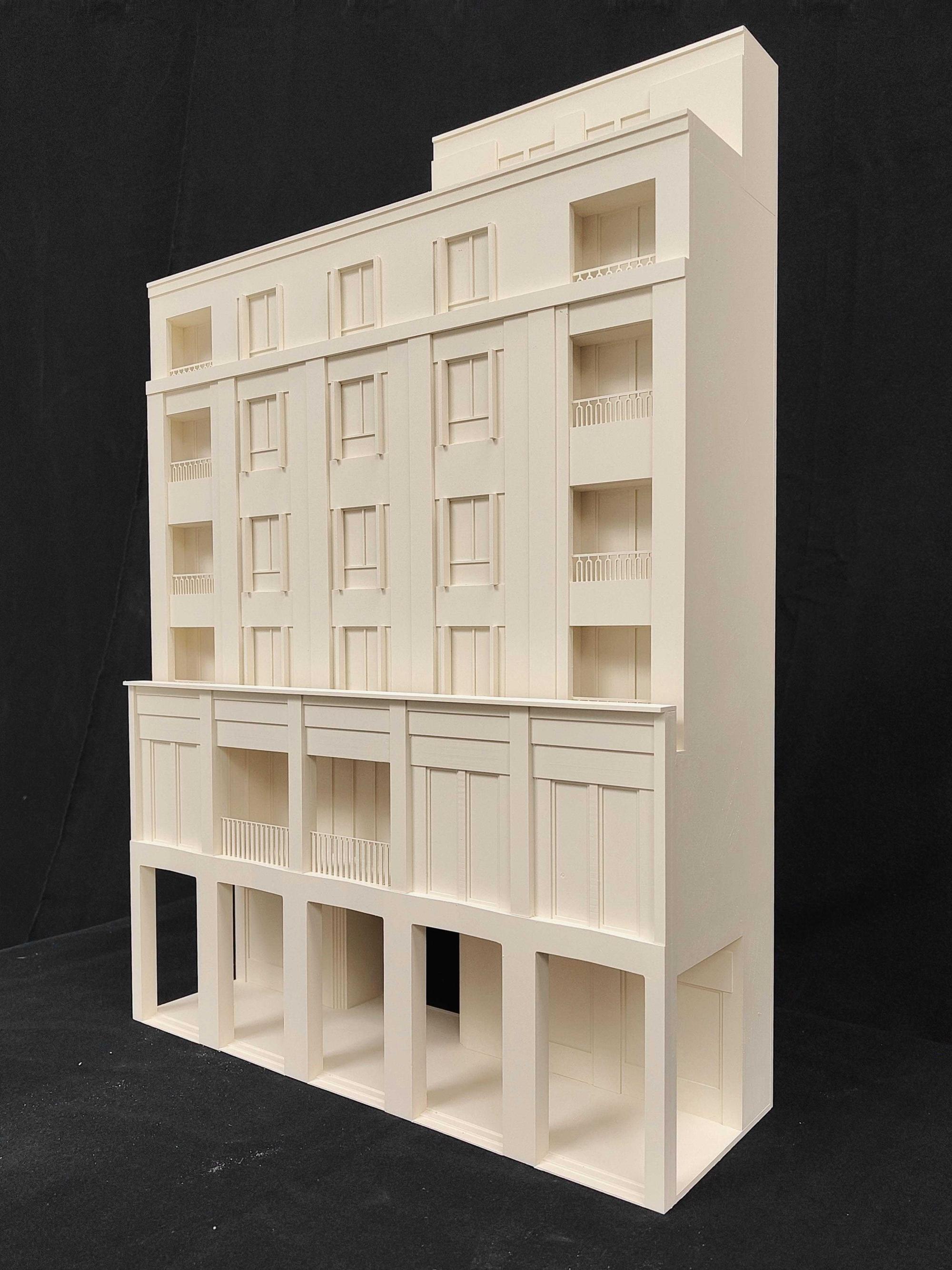
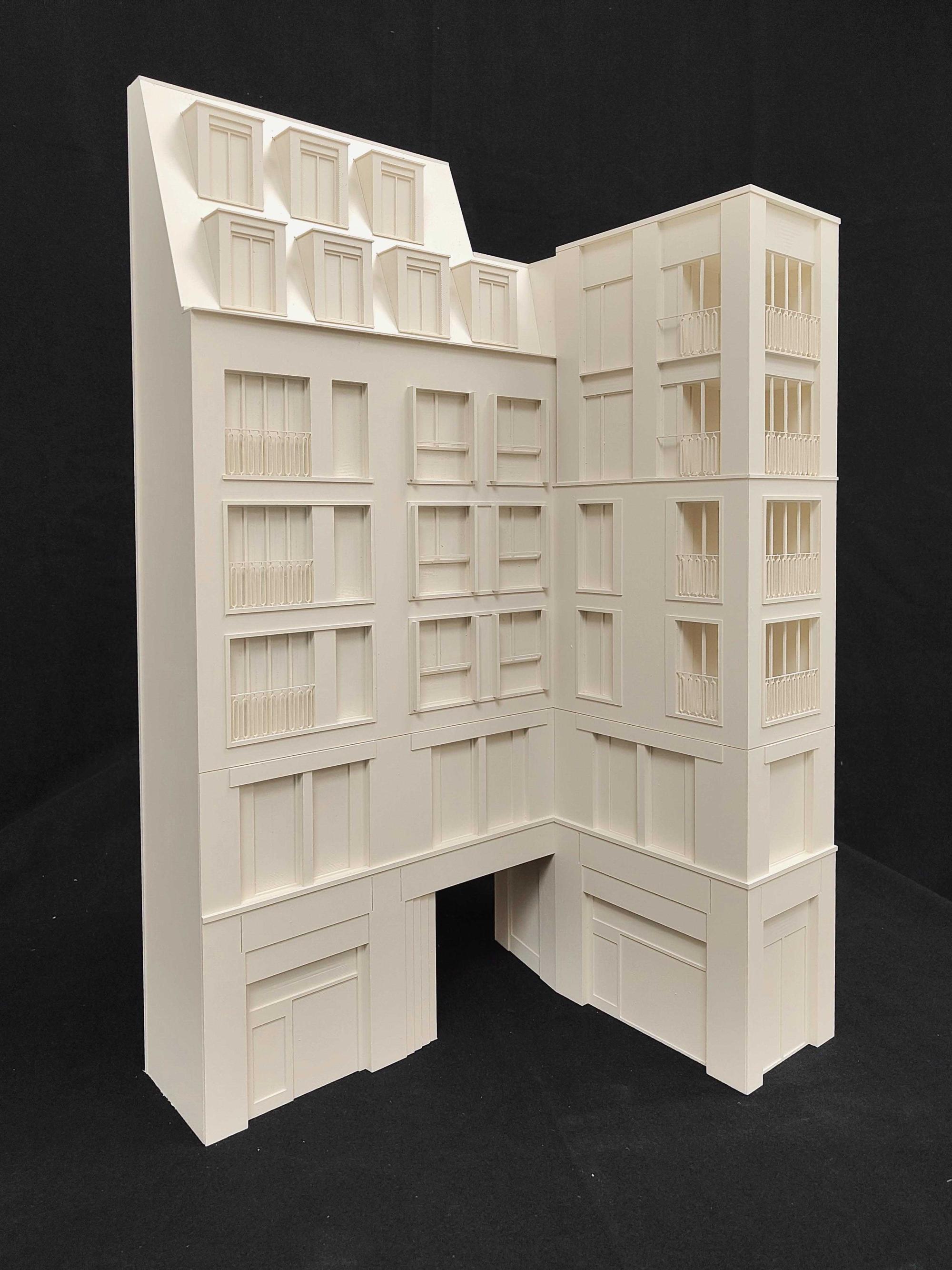
Sited at Plot A4 within the Molkenmarkt Masterplan, the mixed-use tower building – or Turmhaus – serves a civic purpose: its ground floor arcade connects two public squares, and it anchors the ‘Cultural Trail’ through the new city quarter.
Comprising seventeen residences, shops, offices, and shared underground service areas on a compact footprint, the proposal reconciles a number of competing requirements to create a hybrid building with an urban presence.
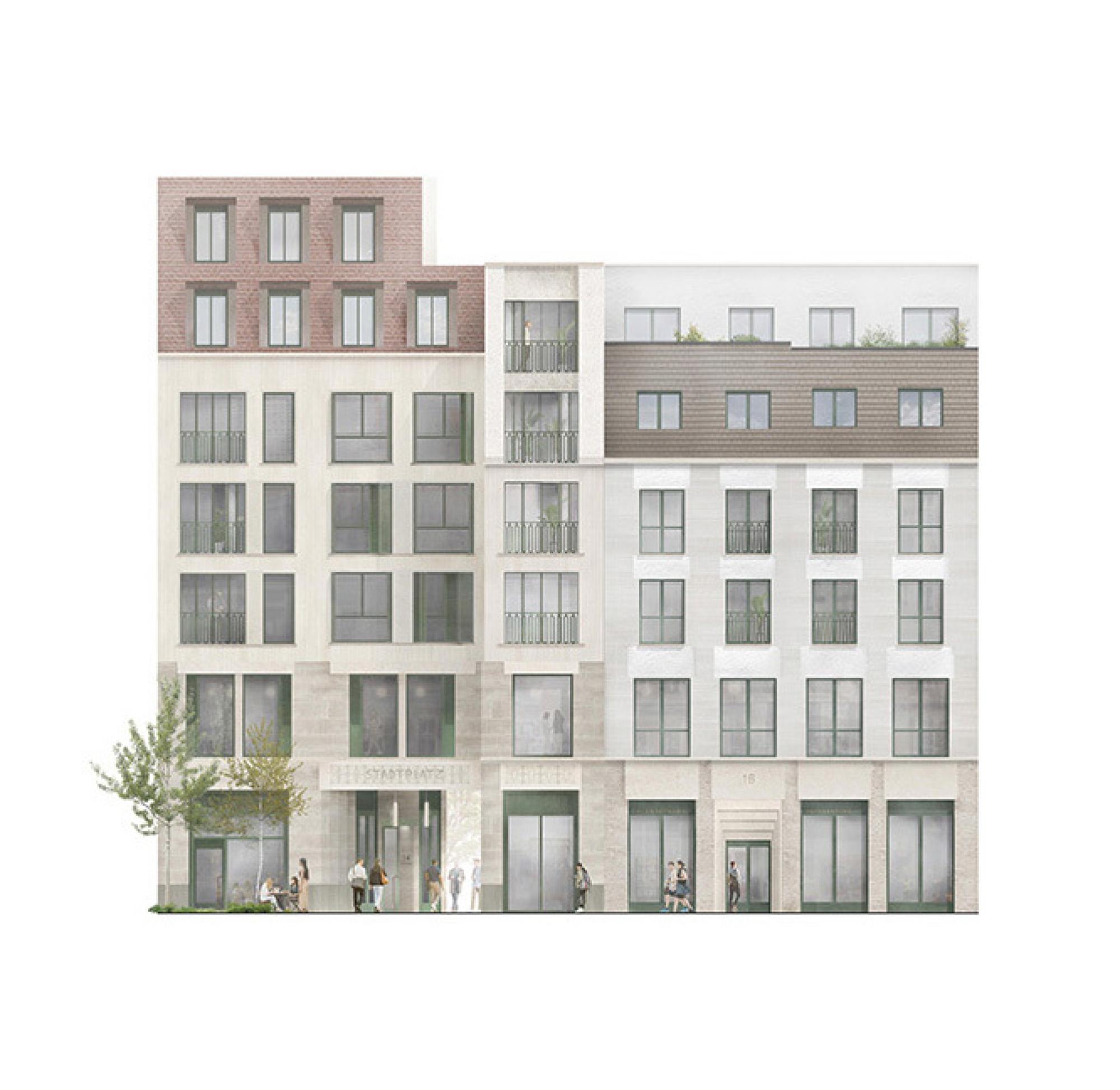
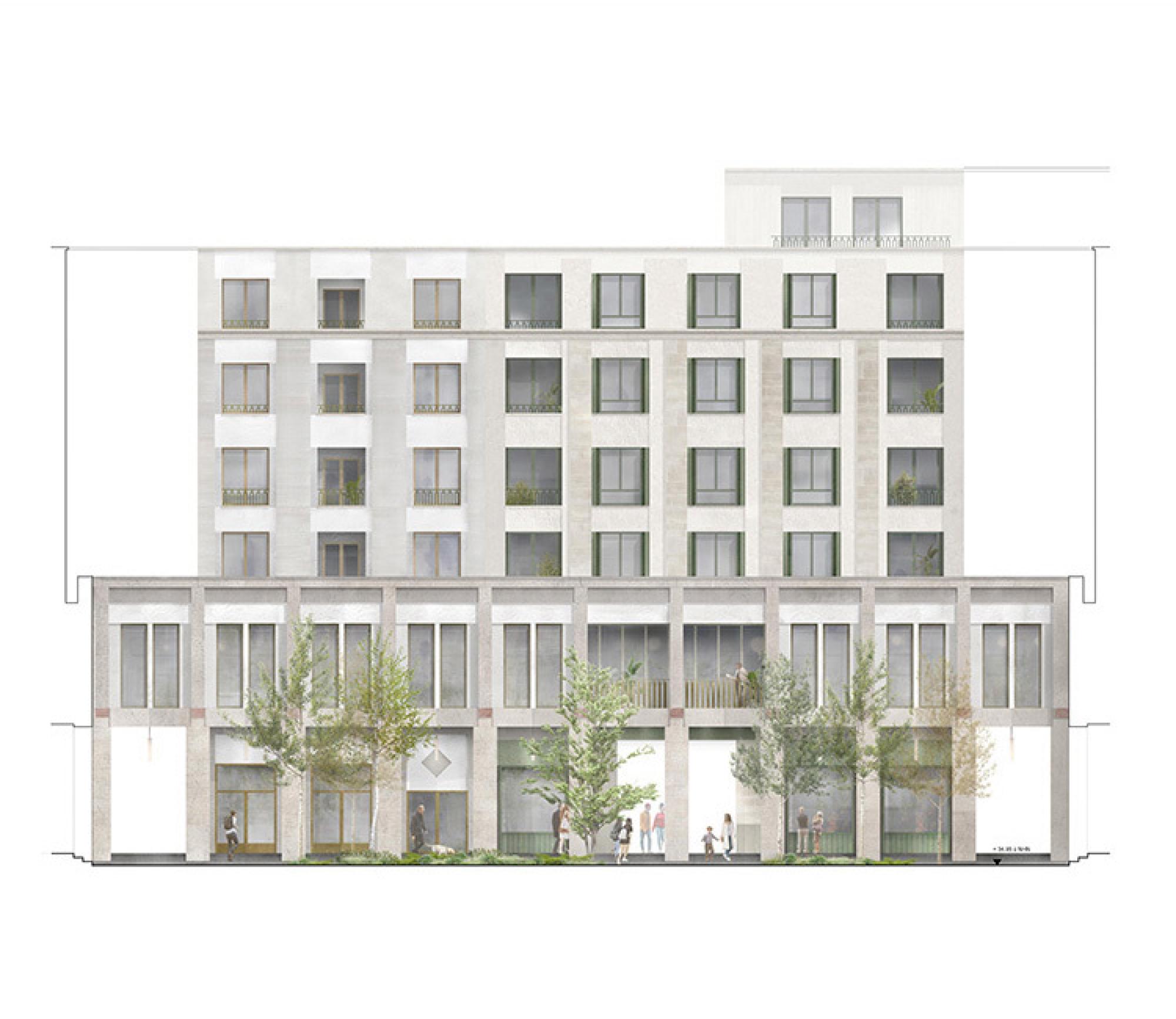
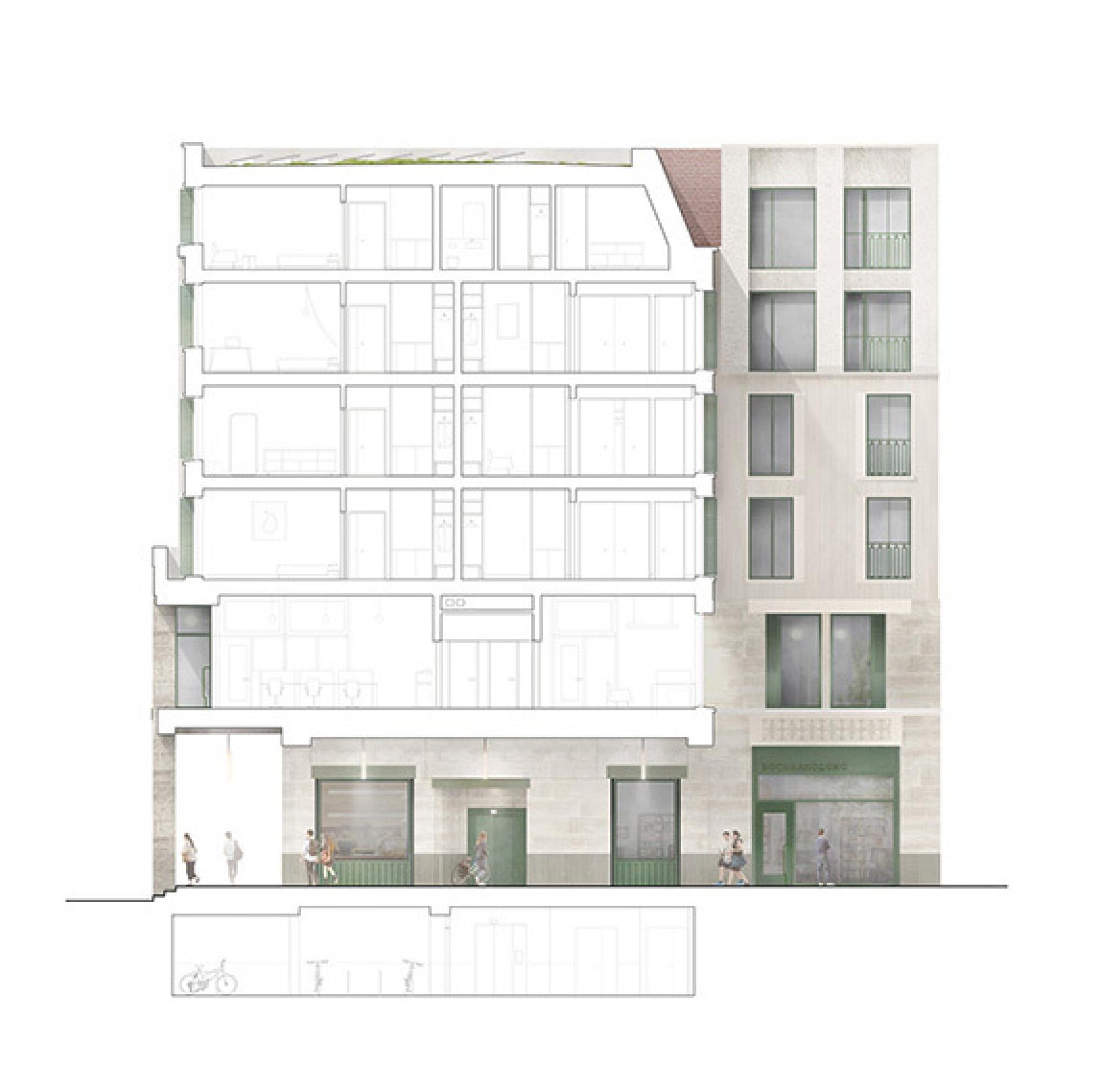
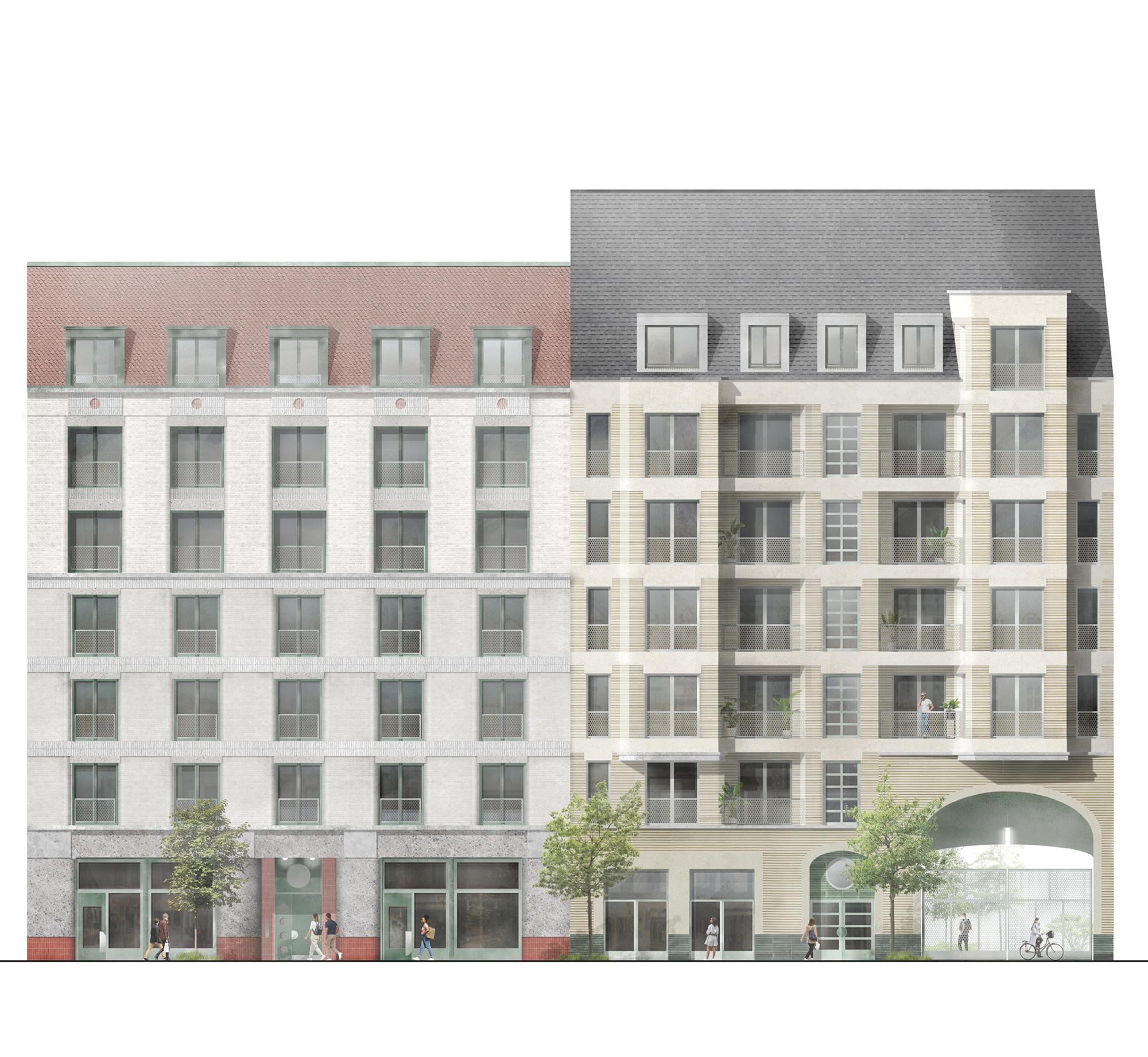
The massing is formed as a composite of two volumes – the townhouse, and the projecting tower with each façade addressing a distinct urban situation. To the south, more formal facades and a continuous two storey colonnade part-enclose a new city square in front of the Altes Stadthaus. To the north, a stepped roofscape and varied massing offers the street a more lively character in keeping with the historic scale of development.
The two faces of the building are united at ground floor by a retail arcade: a civic contribution and a covered entrance threshold to the commercial and residential accommodation housed above. Apartments within are designed to avoid the typical compartmentalisation of cellular rooms. Instead, multiple entry points to rooms create circuits around the central wardrobe module, extending the perception of space and opening up the flexibility of the plan.
Hofgebäude
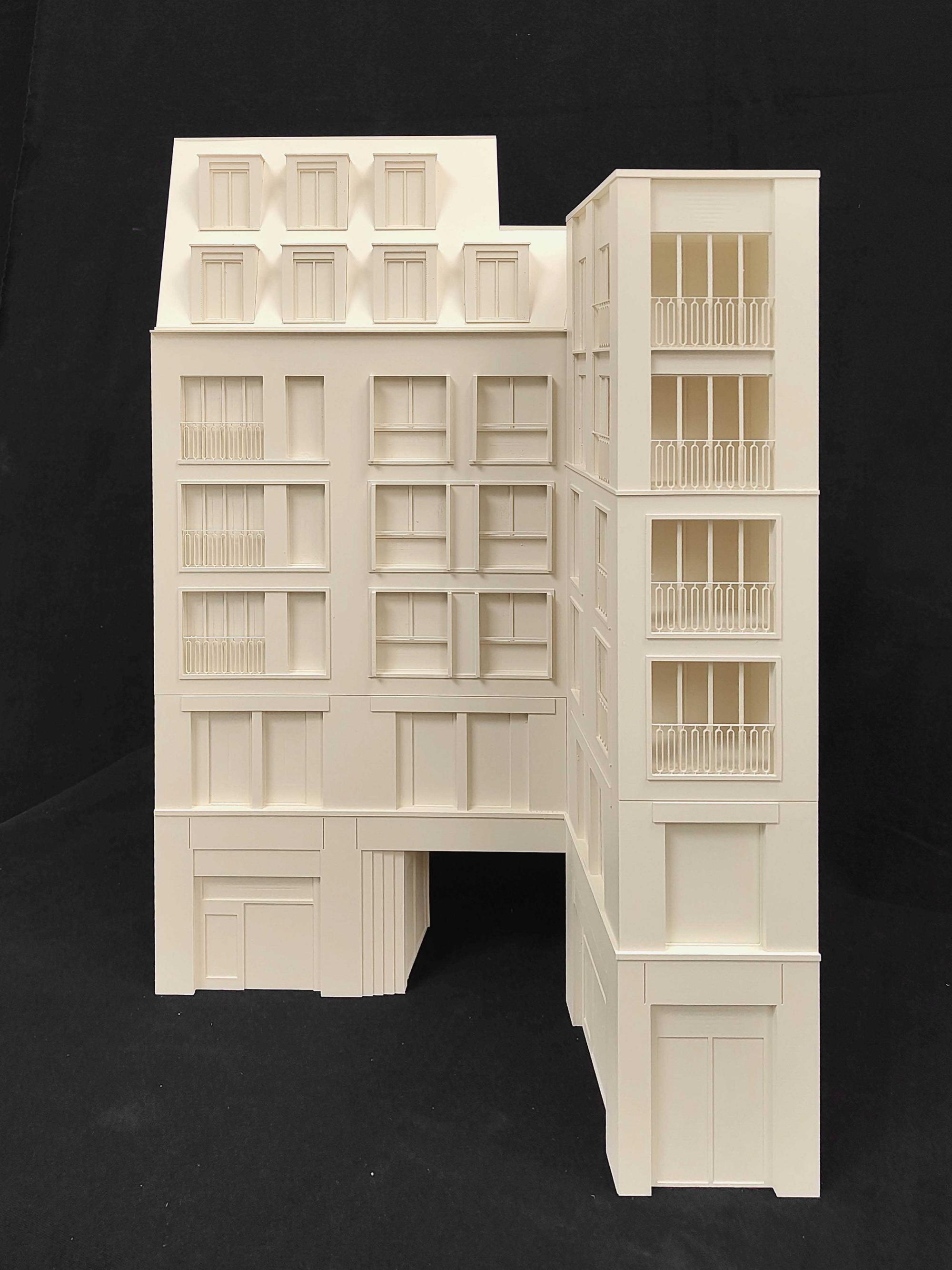
At Plot B2.3, the residential Courtyard Building - or Hofgebäude - is fully enclosed within the urban block as a contemporary reimagining the Berlin hof typology. The Hofgebäude is conceived as a pair of conjoined villas brought together as a unified whole, comprising twenty two affordable dwellings.
The linear building bisects the urban block into two courtyards: the verdant planted character of Gartenhof, which the main living spaces are oriented toward, and the busier urban character of Stadthof, which is shielded by the depth of a deck-access gallery.
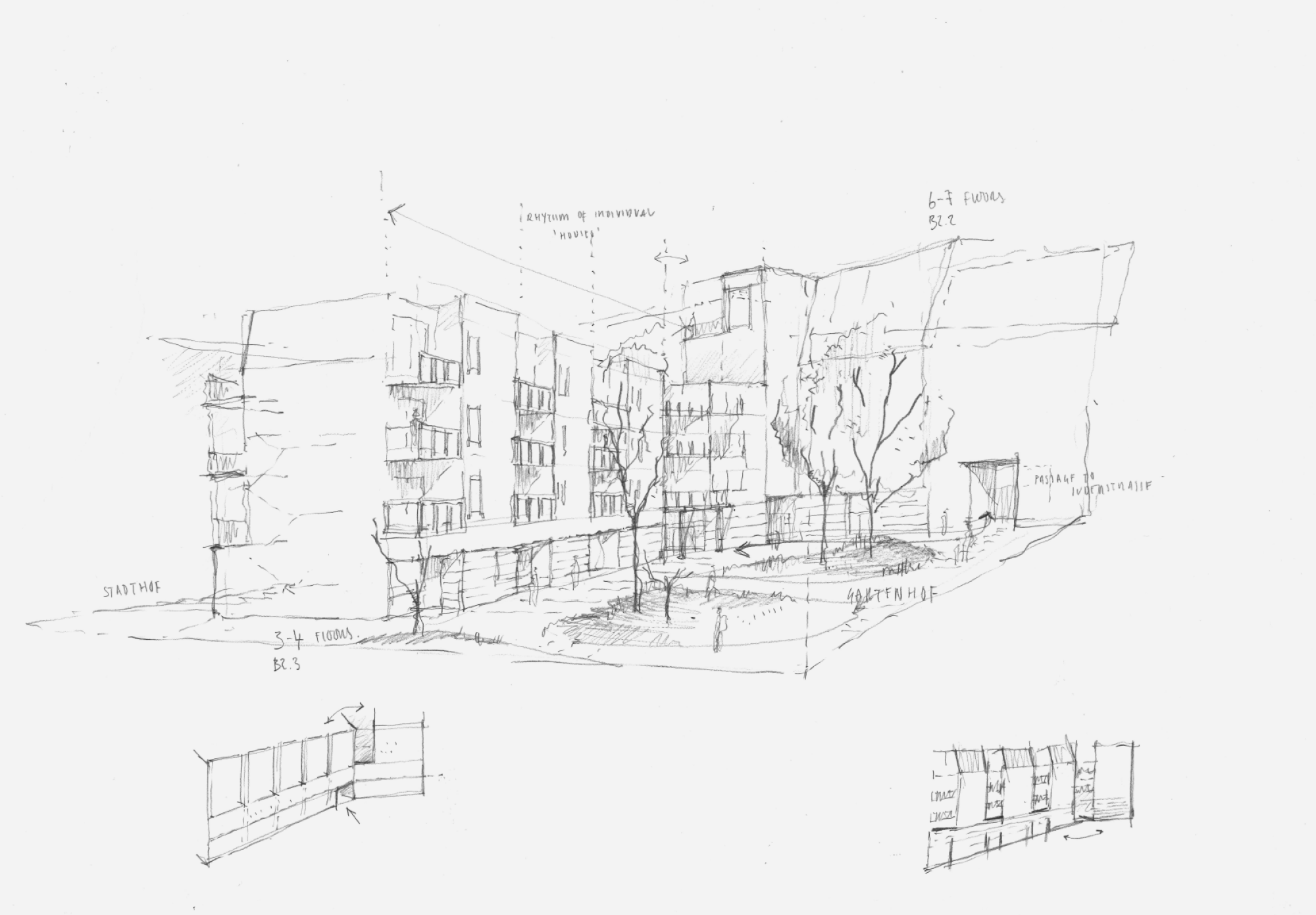
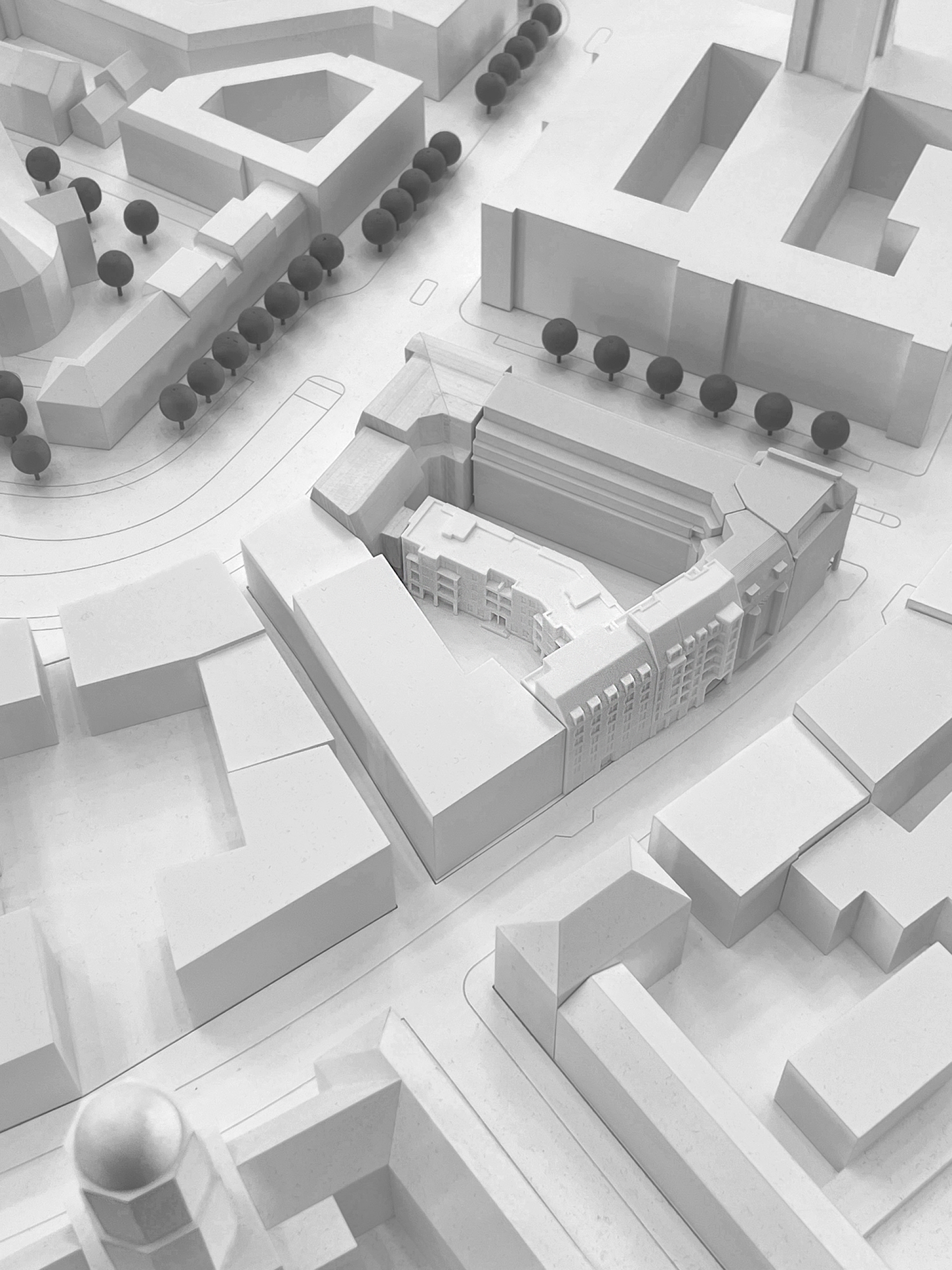
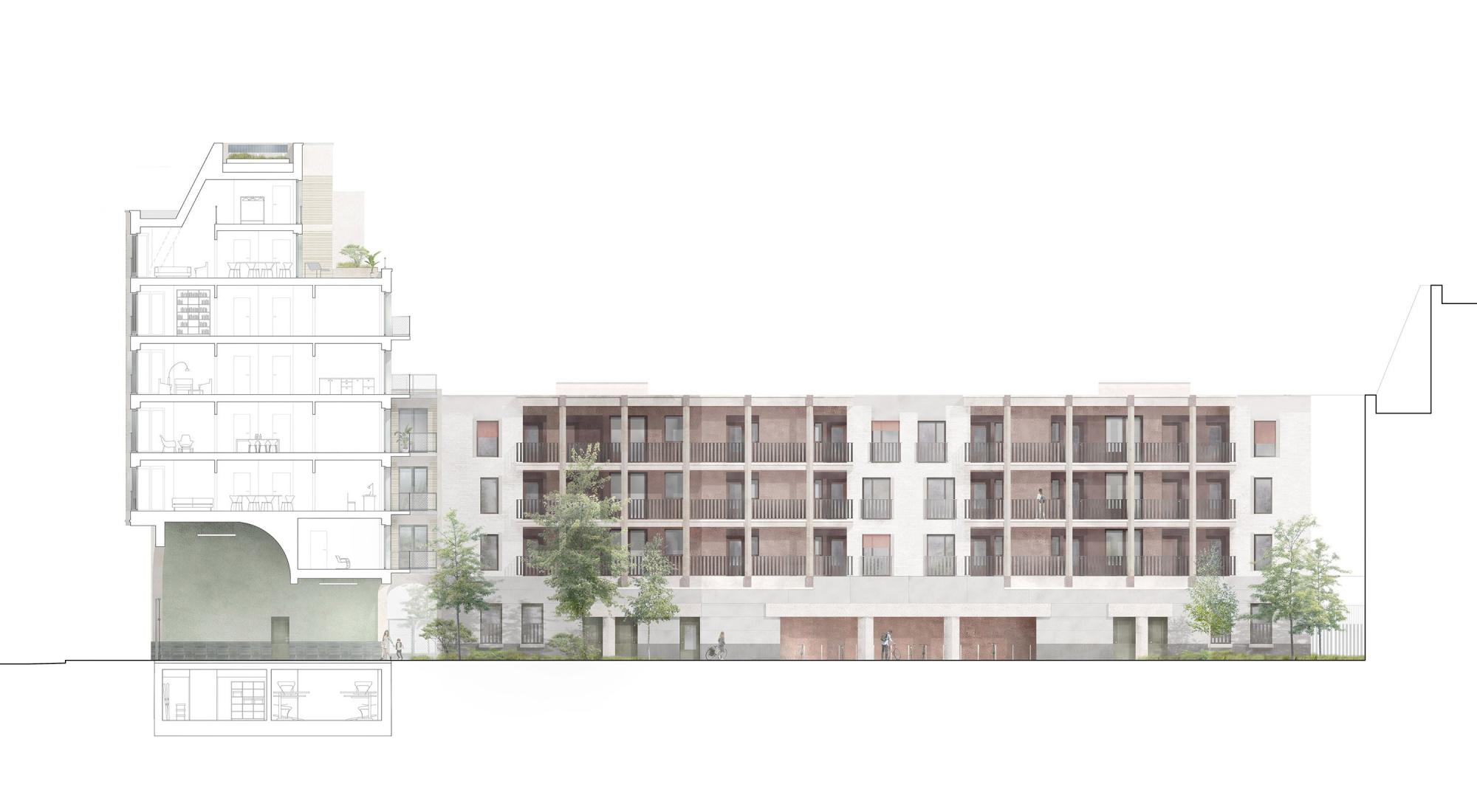
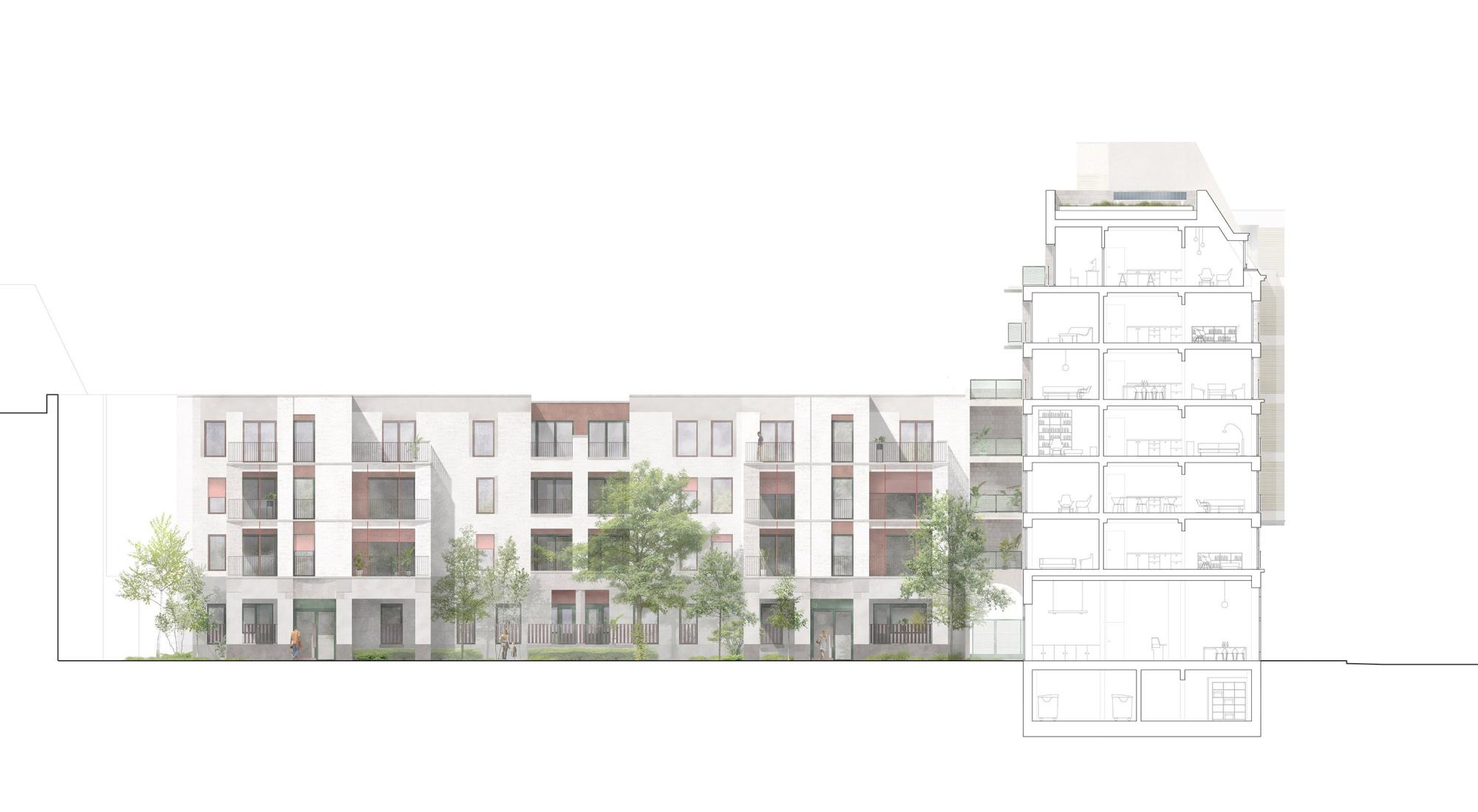
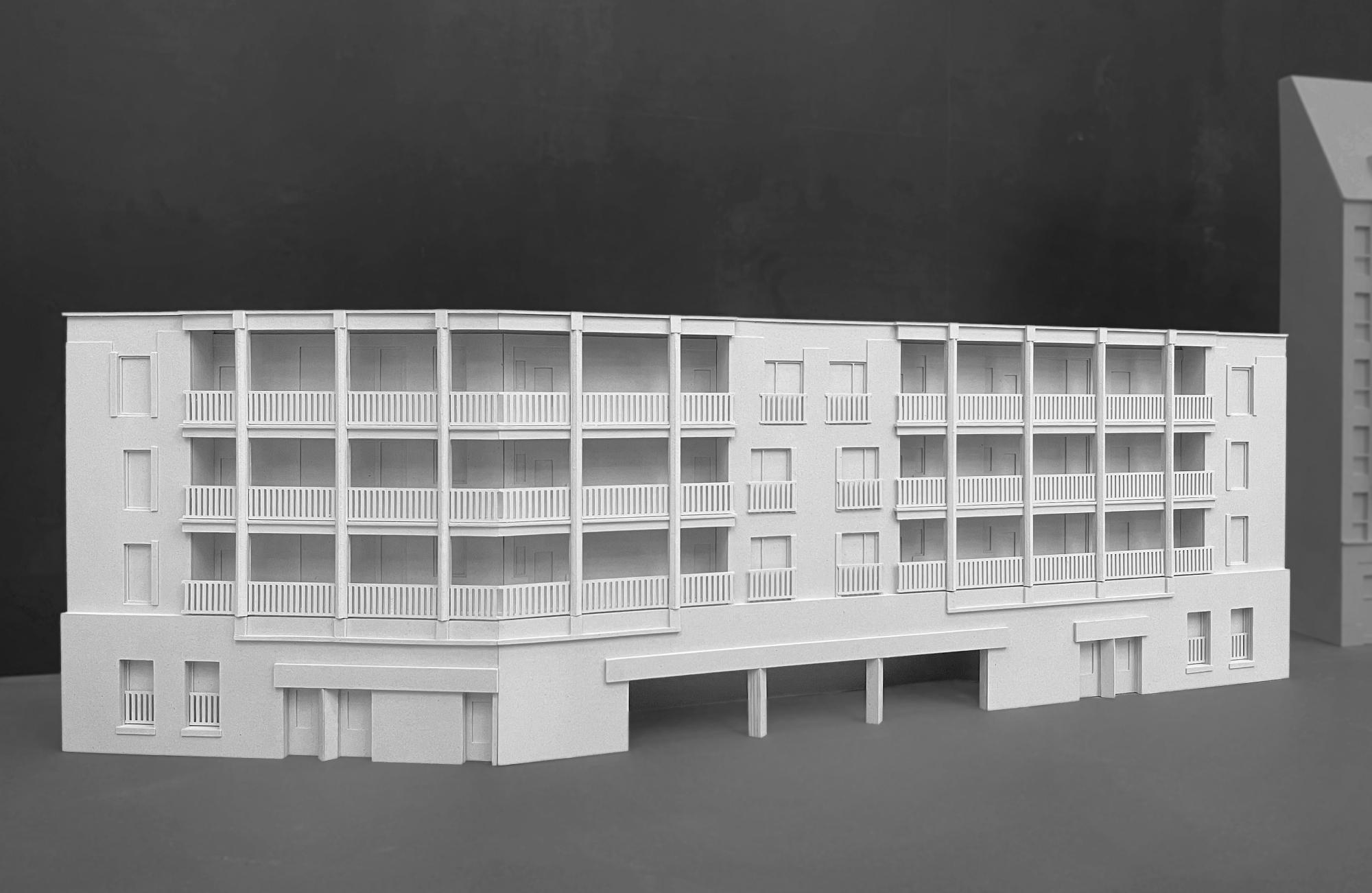
On the Gartenhof elevation, projecting risalits mark the building’s entrances and reflect the internal organisation comprising two access stairs and two deck-access galleries. Columns, lintels and pilasters establish classical proportions, while the folded geometry, asymmetries and deeply recessed loggias generate a rich interplay of surface and shadow. Toward the more civic Stadthof, the same architectural elements are expressed along the access deck as a more open grid.
Internally, the building plan is organised as two halves joined at the centre. This creates an arrangement with mirrored cores and repeated flat types which bring efficiency to a constricted plot. All homes are dual aspect, benefiting from sunlight, natural cross ventilation and views towards both courtyards.
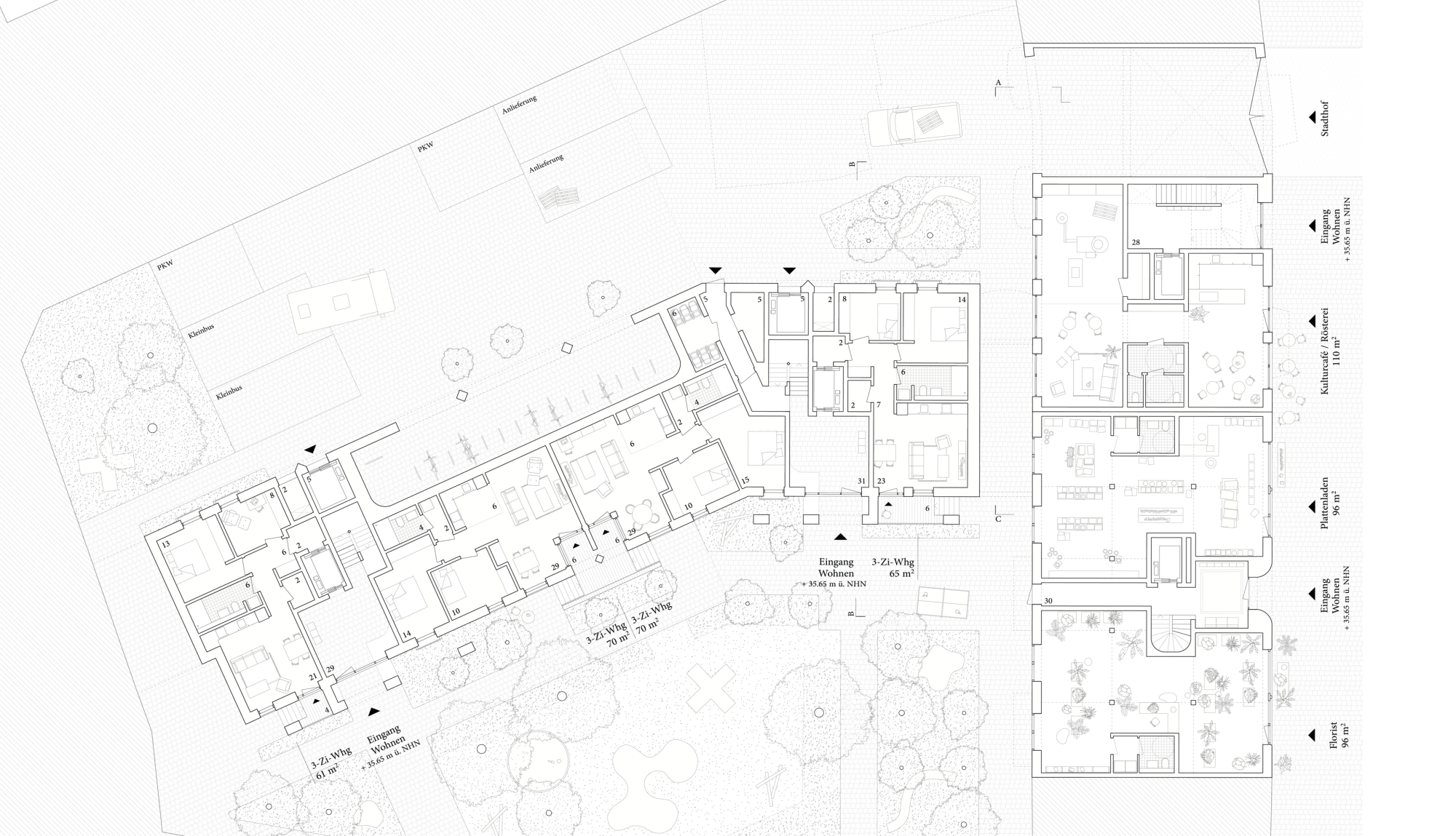
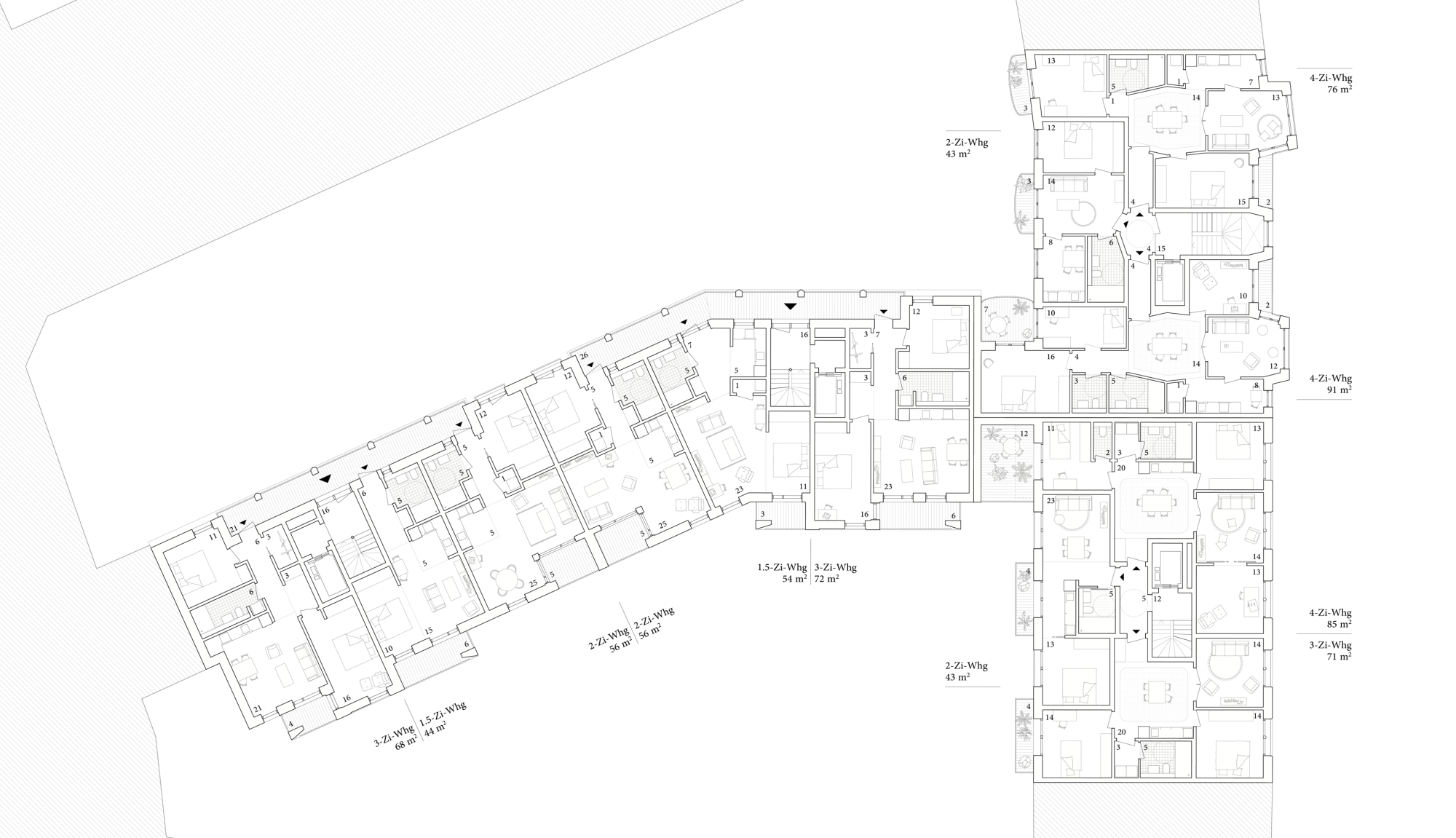
Our Hofgebäude proposals within Block B were awarded joint-first prize in the competition, launched in 2025 by the Senate Department for Urban Development, Construction and Housing with WBM Wohnungsbaugesellschaft Berlin-Mitte. Following this result, our proposals for Turmhaus were awarded second prize in the competition for Block A. Throughout the design process Gort Scott has worked closely with our collaborators: Kim Nalleweg, Berlin and Duplex Architekten, Hamburg.
Further information
Data
- Location
- Berlin
- Project type
- Homes and mixed-use
- Status
- Joint-first prize competition - Block B, second prize competition - Block A
Credits
- Client
- Wohnungsbaugesellschaft Berlin-Mitte (WBM) with the Berlin Senate Department for Urban Development, Construction, and Housing
- Gort Scott Team
- Jay Gort, Benjamin Carter, Josh Heath
- Collaborators
- Duplex Architekten, Kim Nalleweg Architekten
- Picture Credits
- Duplex Architekten, Kim Nalleweg Architekten, Gort Scott (Visuals), Modellbau Milde Berlin, Kim Nalleweg (Models)